Why is my sewer line backing up into my basement
Sewage in your Manassas basement means the main line is blocked or broken. Here are the real causes, warning signs, and what to do next.
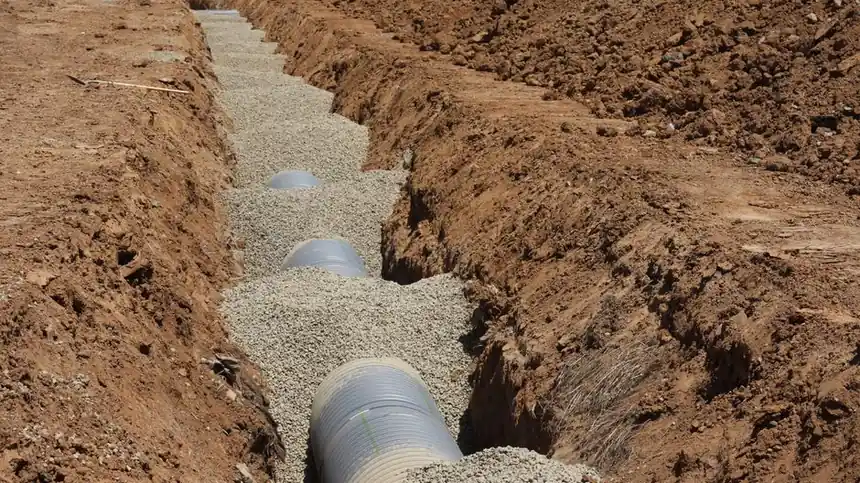
Your sewer line is backing up into your basement because the main line that carries waste away from your house is blocked, broken, or overwhelmed - and the lowest drain in the home, usually the basement floor drain or laundry standpipe, is the first place that waste has to go. In Manassas, the three causes we see most often are tree root intrusion, grease and sludge buildup, and collapsed clay or cast iron pipe under older lots. The rest of this post walks through each cause, what you can safely do in the first hour, and when the problem is bigger than a plunger.
The short answer: your main line is blocked or broken
A basement sewer backup in Manassas is almost never a problem with the fixture itself. It is a main line backup, which means the blockage sits somewhere between your house and the municipal sewer connection - often 30 to 90 feet from the foundation. Every drain above that blockage keeps draining, and the waste has nowhere to go but down into your basement.
That is why a basement floor drain bubbling when you run the washing machine is such a telling symptom. The washer dumps 30 to 40 gallons in a few minutes, the line can't move it, and the floor drain becomes the relief valve.
If you want the plainest version of the answer: why is my sewer line backing up into my basement Manassas VA homeowners ask about almost always comes down to a physical obstruction or a structural failure in the main line, not a clogged sink trap.
Why does my sewer line keep backing up into my basement in Manassas?
A repeat backup means the first repair only cleared part of the problem. When a line backs up twice in a season, the cause is usually one of three things: roots that grew back into the pipe, a bellied section of pipe holding standing water and debris, or a crack that lets soil and groundwater into the line. Clearing the pipe restores flow for a while, but the defect is still there.
We see this constantly in the older neighborhoods around Sudley Road and the streets off Centreville Road, where original clay tile laterals from the 1950s through the 1970s are still in the ground. Clay tile is jointed every 2 to 3 feet. Each joint is a seam, and every seam is a place roots can enter and soil can shift.
If your line has backed up more than once in the last 12 months, stop treating it as a clog. It needs to be looked at with a camera before you spend another dollar on snaking.
The most common causes of basement sewer backup in Manassas, Virginia
1. Tree root intrusion
Roots do not break into a pipe for fun - they follow moisture and condensation at the joints. Once inside, they form a mat that catches paper, grease, and waste. A root mass the size of a softball can cut flow in a 4-inch line by more than half. Maples, willows, and mature oaks are the worst offenders, and plenty of Manassas lots have them planted within 10 feet of the sewer run.
2. Grease, sludge, and wipes
Grease cools and hardens on the pipe wall. Over years it narrows a 4-inch line to 2 inches or less. Add flushable wipes - which do not break down, despite the label - and you get a dam that catches everything behind it. This is the single most preventable cause of a main line backup Manassas VA homeowners deal with.
3. Collapsed or bellied pipe
Clay tile cracks. Cast iron from the 1960s rusts through from the inside. Orangeburg pipe - tar paper pipe used in some mid-century builds - deforms under load. Any of these can sag into a belly where water and solids sit instead of draining. A belly is a chronic backup waiting to happen.
4. Off-grade or shifted pipe
Sewer lines rely on a fall of roughly 1/4 inch per foot. If soil settles and a section loses that pitch, waste stops moving. This is common after decades of Virginia clay expanding and contracting with wet winters and dry summers.
5. Municipal main surcharge
Sometimes the problem is not on your property at all. During heavy rain, the city main can surcharge - fill up faster than it can drain - and push water backward into the lowest connected home. If your backup only happens during storms and your neighbors have the same issue, that is the tell.
6. Blocked or failing septic system
If your home is on septic rather than city sewer, a full tank or a failed drain field will send waste back into the house. A tank that has not been pumped in 4 or 5 years is a prime suspect.
What to do when sewage backs up in my Manassas basement
Stop using water immediately. Every flush, shower, and load of laundry adds volume to a line that is already full, and it pushes more contaminated water across your floor.
- Shut off the water. Stop all fixtures. If the backup is active and rising, shut the main water valve to the house.
- Cut power to the affected area. If water is anywhere near outlets, the panel, or the furnace, kill the breaker for the basement before you step in.
- Do not touch the water bare-handed. Sewage carries bacteria, viruses, and parasites. Rubber boots and gloves, minimum.
- Call for emergency service. A backup that is actively flowing is an emergency sewer backup Manassas VA situation, not a next-week appointment.
- Document everything. Photograph the water line on the wall, damaged items, and the affected square footage. Your insurer will ask.
- Keep people and pets out until the area has been cleaned and disinfected.
Do not run a snake down the cleanout yourself if you have never done it. You can push a root ball deeper, crack a clay tile, or get the cable stuck - all of which turn a $400 clearing job into a $6,000 excavation. Our team handles Sewer Line Cleaning Manassas VA with the right cutter heads for the pipe material, and we camera the line afterward so you can see what came out and what is still in there.
Is a basement sewer backup dangerous in Manassas VA?
Yes. Raw sewage contains E. coli, salmonella, hepatitis A, and parasitic worms, and it does not need to be deep to be a health hazard. A quarter inch of standing sewage across a basement floor is enough to contaminate everything it touches.
Three specific risks matter:
- Airborne bacteria and sewer gas. Hydrogen sulfide and methane come up with the water. Methane is flammable. If you smell rotten eggs, ventilate and get out.
- Structural and electrical damage. Sewage wicks into drywall, carpet pad, and framing within hours. It corrodes the bottom of a water heater and can reach the furnace blower.
- Mold. In a humid Virginia basement, mold can colonize wet drywall in 24 to 48 hours.
Cleaning a sewage backup is not a mop-and-bleach job. It requires extraction, disposal of porous materials, and commercial-grade disinfection. We handle that as part of Sewer Backup Cleanup Manassas VA so the repair and the cleanup are done by the same crew.
Common mistakes homeowners make with a sewer backup
The most expensive mistake is treating a main line problem like a sink clog. Here is what we see go wrong, over and over.
- Pouring chemical drain cleaner into the floor drain. It will not reach a blockage 40 feet out in the yard, and it sits in the trap eating the pipe.
- Flushing the line and calling it fixed. If the cause was roots or a crack, the backup returns in 3 to 9 months.
- Skipping the camera. A clearing without a Sewer Camera Inspection Manassas VA is a guess. The camera is what tells you whether you are looking at a $450 clearing or a $9,000 replacement.
- Waiting on insurance. Most homeowner policies cover sudden accidental discharge but exclude long-term seepage. Document first, then call.
- Assuming the city owns the problem. In most Manassas neighborhoods, the homeowner owns the lateral from the house all the way to the main. That is 30 to 90 feet of pipe on your dime.
One more: do not let a contractor start digging without showing you the camera footage first. If they cannot show you the defect on screen, they cannot tell you what the repair actually is.
When to call a professional
Call us when the backup is active, when it has happened more than once, when you see sewage at the floor drain during rain, or when the water will not recede after you stop using fixtures. Those four situations point to a main line defect, and no amount of plunging will fix them.
For a single slow drain with no backup, a standard Drain Cleaning Manassas VA visit is usually enough. For anything at the floor drain or cleanout, you need main line work.
Our shop is at 8467 Sudley Road, Manassas, VA 20109, USA. We run camera inspections daily across the city and the surrounding Prince William County area, and we tell you what the pipe needs before any work starts. If the line is a candidate for a no-dig fix, we will say so - most root-damaged laterals can be restored with Trenchless Sewer Repair Manassas VA rather than a full excavation of your yard, driveway, or landscaping.
Frequently Asked Questions
Why does my sewer line keep backing up into my basement in Manassas?
Because the underlying defect was never repaired. Repeat backups within 12 months almost always mean root regrowth, a bellied pipe section, or a crack letting soil in. Clearing restores flow temporarily; the pipe still needs a camera inspection and a permanent fix.
Is a basement sewer backup dangerous in Manassas VA?
Yes. Sewage carries E. coli, salmonella, and hepatitis A, and it can release methane and hydrogen sulfide gas. Mold can start within 24 to 48 hours in a humid basement. Keep everyone out until the area is extracted and disinfected by a professional crew.
Who do I call for a sewer backup in Manassas?
Call a licensed sewer and drain contractor, not a general handyman. You want a company that can camera the line, clear it, and repair it - one crew, one diagnosis. We serve all of Manassas and Prince William County from 8467 Sudley Road.
How do I stop sewage from backing up in my Manassas home?
Three things work: never pour grease down a drain, never flush wipes, and get a camera inspection every 18 to 24 months if your home was built before 1980. If roots are the recurring issue, a trenchless liner or pipe bursting replacement ends the cycle.
Does homeowners insurance cover a sewer backup in Virginia?
Standard Virginia policies usually cover sudden accidental discharge but exclude long-term seepage and root damage. Many homeowners add a sewer backup endorsement for $50 to $150 a year. Photograph everything before cleanup begins and file the claim the same day.
Get help with Sewer Line Repair in Manassas
Sewage in your basement is a today problem, not a next-week problem. We camera the line, find the actual cause, and fix it - clearing, spot repair, relining, or full replacement - with upfront pricing before we start.
Call 13018727698 now and we will get a crew headed your way.